
Water Heaters
Water Heater Thermostat Replacement: Signs, Cost, and DIY Limits
Lukewarm water, short showers, and tripping high-limit switches: when a thermostat swap actually fixes the issue.
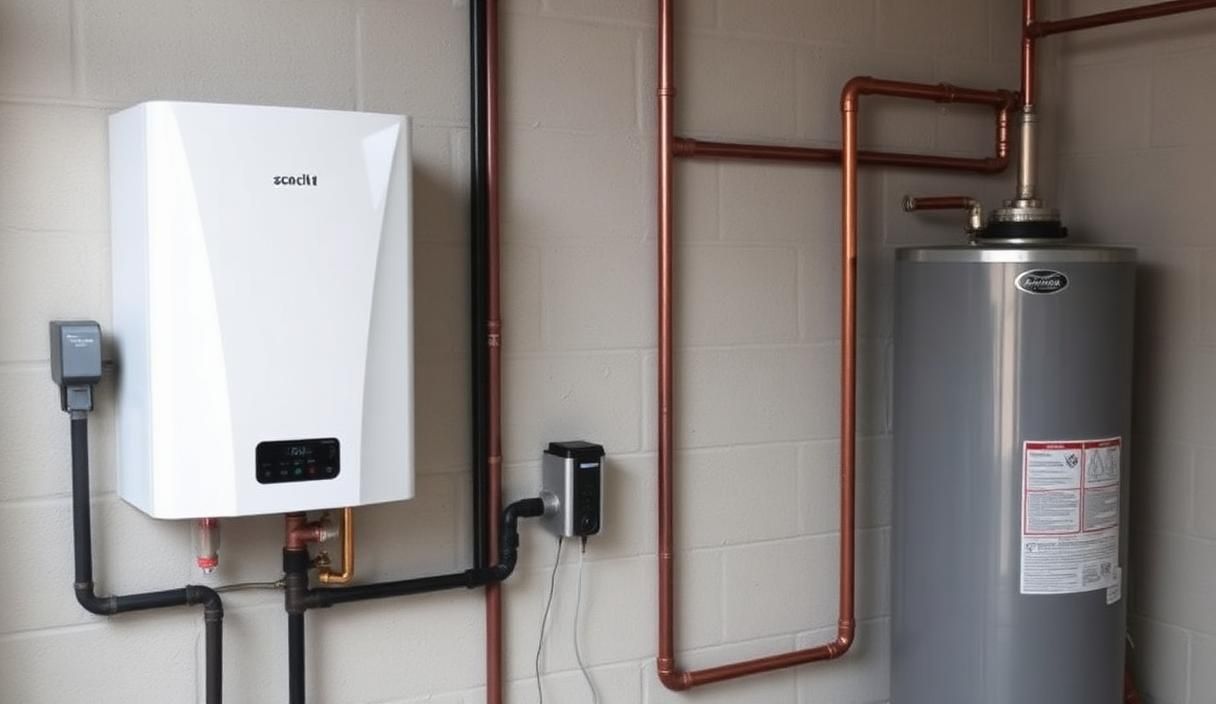
Electric water heaters have two thermostats (upper and lower), and each controls its own element. Which symptom you have tells you which one to suspect: no hot water at all points at the upper, and hot water that runs out unusually fast points at the lower.
How the two work together
The upper thermostat has priority. It heats the top of the tank first, then hands control to the lower one to bring the rest up. That sequencing is why a failed upper leaves you with nothing, while a failed lower still gives you a tankful of hot water at the top that empties in one shower.
Thermostat or element
They produce overlapping symptoms and are tested differently. A multimeter on a disconnected element reads continuity and resistance; a thermostat is checked for continuity across its terminals as it calls for heat. Guessing between them means replacing both, which is common practice and is sometimes reasonable. The parts are inexpensive relative to the labour of opening the unit twice.
The real DIY limit
This is 240 volt work inside a unit full of water. The breaker must be off and verified off at the terminals, not merely switched. Every year someone is injured assuming a switched breaker is a dead circuit. If you are not comfortable confirming that with a meter, this is the point to stop.
Set it to 120°F, not higher
120°F is the recommended setting, and it matters twice over here: it is the scald threshold for children and older adults, and every degree above it accelerates scale deposition in hard water. Turning a heater up to compensate for a tank that runs out fast treats the symptom and shortens the tank.
What it costs
We do not publish a figure. What sets it is access to the unit, whether one thermostat or both are being changed, and whether the elements are being done at the same time, which is usually sensible if the unit is open and the tank has years on it. The number is agreed in writing before we start.
Reset it once, and only once
The high-limit reset behind the upper panel is a safety cutout, not a restart button. Pressing it clears the trip; it does not address whatever caused the water to overheat. A heater that trips it again has a failing thermostat sticking closed or an element shorted to the tank, and repeatedly resetting a safety device on a 240 volt appliance full of water is the wrong instinct.
Both elements, or just one
If the unit has years on it and it is open anyway, replacing both elements alongside the thermostats is usually the sensible call: the labour is the expensive part and the second element is likely to follow the first. On a nearly new heater with a single clear fault, replacing only what failed is the right answer.