
Water Heaters
Water Heater Leaking From the Bottom: Repair or Replace?
If the tank itself is weeping, the unit is done. Here's how to decide your next move tonight.
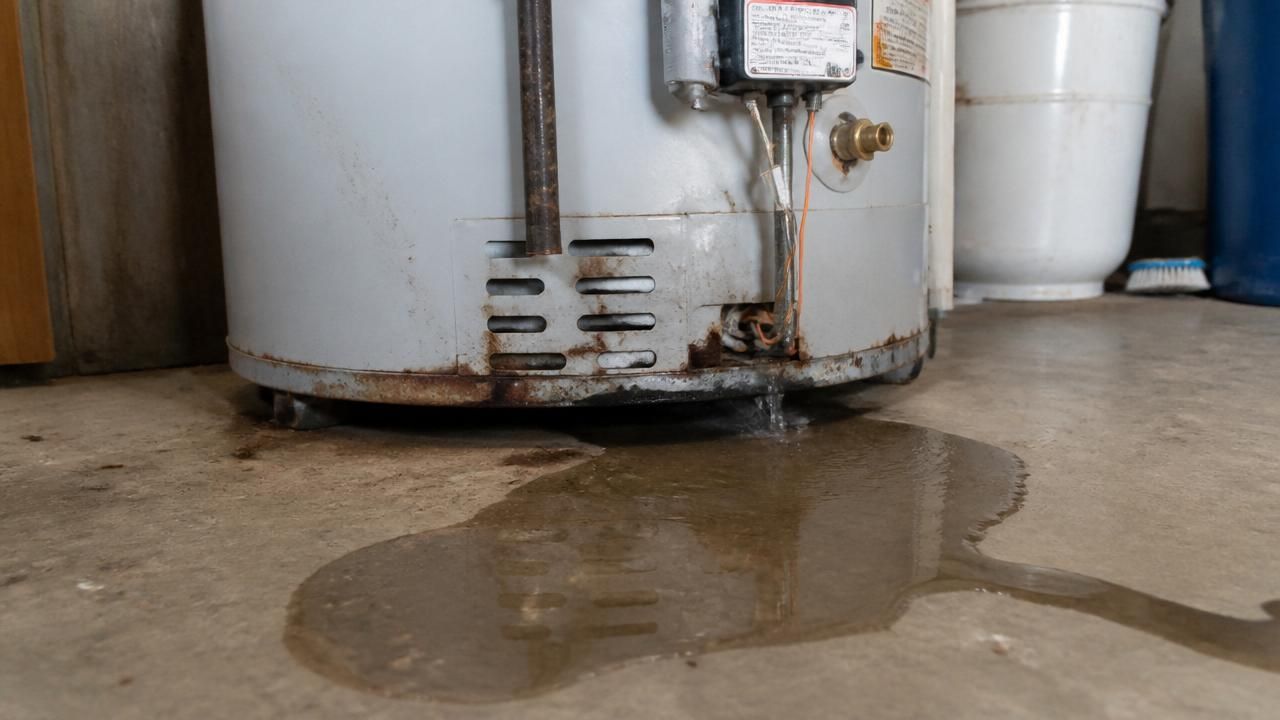
Where the water is coming from decides everything. A leak from a fitting, a valve or the drain cock is a repair. Water weeping from the tank itself is the end of the heater, and no sealant, patch or weld changes that: the leak is corrosion through the steel, and it only gets larger.
Find the actual source before anything else
Dry everything, put paper towel down, and come back in an hour. Water at the top usually means a supply connection or the T&P valve. Water at the base can still be a drain cock, a bad flex connector running down, or condensation on a cold day; all repairable. Water appearing from under the jacket with no fitting above it is the tank.
The T&P valve is not a fault, it is a warning
If the temperature and pressure relief valve is discharging, it is doing its job. Either the thermostat is set too high, or the system pressure is too high. Often because a pressure regulator has failed or a closed system has no expansion tank. Capping or plugging that valve is genuinely dangerous. The fix is finding out why it opened.
Shut it down safely
Close the cold inlet valve on top of the heater. On gas, turn the control to off; on electric, switch the breaker off: an element left powered in a draining tank will burn out. Then attach a hose to the drain cock and run it somewhere lower than the tank.
Repair or replace
Under about eight years old with a sound tank, repair is usually right. Past ten, with hard-water sediment and a tank that is already weeping, a replacement is the honest answer and a repair is buying a season. Ours include new flex connectors, an updated T&P valve, a code-compliant earthquake strap and a fresh sediment trap.
The strap is not optional in California
California requires water heaters to be seismically strapped, and the replacement is permitted work. A swap done without a permit and without correct strapping is the kind of thing that turns up during a home sale inspection years later. We pull the permit and we close it.
What to do with the water already on the floor
Get it up quickly and check what it has reached. A garage slab is forgiving; drywall, skirting and stored cardboard are not, and a heater in an interior closet or on an upper floor can put water into a ceiling below within hours. If the unit sits in a drain pan, confirm the pan's outlet is actually connected and clear: a blocked pan simply overflows somewhere less convenient.