
Water Heaters
Water Heater Sizing Guide for Orange County Homes
How many gallons (or GPM for tankless) you actually need based on bathrooms and household size.
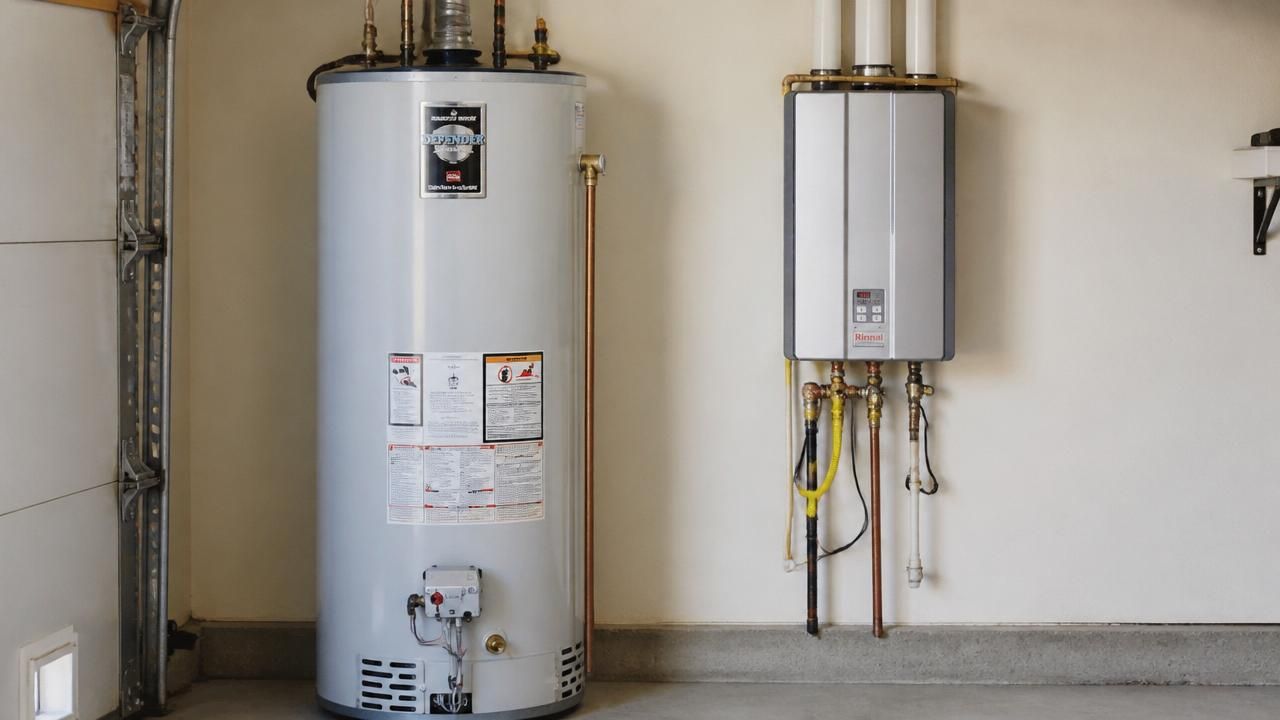
Tank heaters are sized on first-hour rating, not on gallons. That figure is how much hot water the unit can actually deliver in the busiest hour, which is the number that decides whether the last shower of the morning is warm. A 50 gallon tank with a strong recovery rate will outperform a 75 gallon one with a weak burner.
Count the peak hour, not the household
Add up what genuinely happens in your busiest hour: roughly 20 gallons for a shower, 20 for a dishwasher cycle, 25 for a full clothes wash, a few for hand washing. Two back-to-back showers and a dishwasher is around 60 gallons, and that is your target first-hour rating: not the tank size printed on the label.
Tankless is sized completely differently
A tankless unit has no reserve, so it is rated in gallons per minute at a given temperature rise. The rise is what people get wrong: incoming water is far colder in January than in August, and a unit sized on summer figures will disappoint the first cold month. That work has its own page.
Gas line and venting decide what will fit
A larger burner needs more gas at peak than the one it replaces, and the existing line is frequently too small or too long. Venting has its own clearances. In practice these two constrain the choice more often than budget does, which is why the measurement happens before the recommendation.
Where it goes matters in Orange County
Most homes here put the heater in the garage, which brings requirements with it: seismic strapping, correct clearances, and combustion air. A unit in an interior closet has stricter venting rules again. The install has to satisfy the city building department (or the County, in unincorporated areas), and it is inspected.
Getting it right the first time
An undersized heater is a daily annoyance for a decade. An oversized one costs more to buy and more to run, standing by to keep water hot that nobody uses. We measure the peak hour, the gas supply and the vent path before recommending anything, and the price is in writing before work starts.
Recovery rate is the number nobody reads
It is on the same label as the capacity, and it says how many gallons the unit can raise to temperature in an hour. Two 50 gallon heaters with different burners recover at genuinely different rates, and after the first hour it is recovery, not capacity, that decides whether the last person to shower gets hot water. When two units look identical on the shelf, this is usually what separates them.