
Water Heaters
Water Heater Repair vs. Replace: The 2026 Decision Guide
Age, warranty status, and repair-to-replacement ratio: the exact math Orange County plumbers use before recommending a new unit.
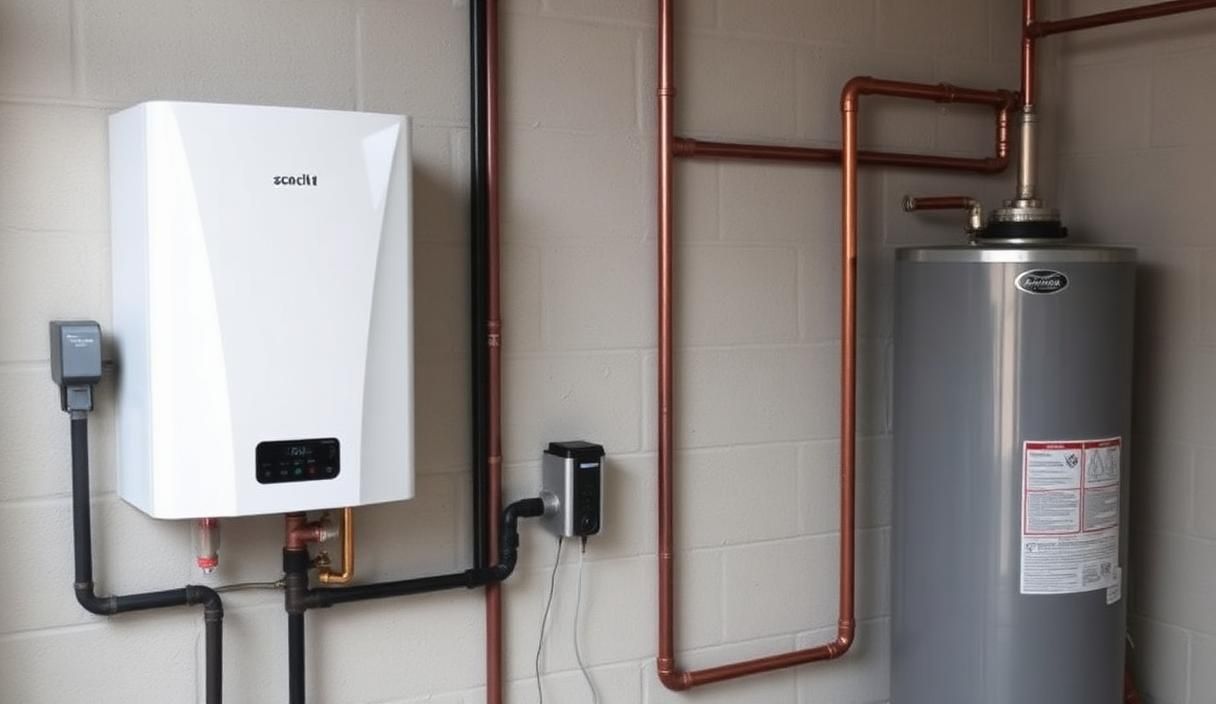
Three questions settle it. Is the tank itself leaking? How old is the unit? And is this the first fault or the third? A sound tank under about eight years old with a first fault is a repair. A leaking tank is a replacement at any age. Everything else sits between those, and age is the tiebreaker.
The tank is the only part that cannot be repaired
Everything bolted to a water heater is serviceable: thermostats, elements, thermocouples, gas valves, relief valves, connectors. The tank is a welded steel vessel with a glass lining and a sacrificial anode, and once corrosion has opened it there is nothing to fix. Distinguishing a leaking fitting from a leaking tank is therefore the first thing to establish, and it is easy: dry everything, lay paper down, and look again in an hour.
Why eight to ten years is the pivot
A typical tank in Orange County water is at or past the middle of its life by then, with sediment on the floor and an anode rod that has likely done its work. A repair on a unit at that stage restores function without changing the trajectory. Below eight years the same repair usually buys years, not months.
The third-fault rule
One fault is a component. Two is coincidence. Three on the same unit within a couple of years is a pattern, and the pattern is the tank ageing around the parts. At that point each repair is a payment against an appliance already on its way out.
What replacement should include
New flex connectors, an updated T&P valve, a code-compliant seismic strap, a fresh sediment trap, and the permit pulled and closed. A swap that reuses old connectors and skips the permit is cheaper on the day and costs more at the next sale, when an inspector finds it.
If you are replacing anyway
It is the moment to ask whether the size is still right and whether tankless makes sense. Both are far cheaper to change now than later. Sizing is done on first-hour rating, and tankless depends on the gas line and vent path. Both have their own pages, and we will tell you which the house calls for.
The anode rod nobody checks
A sacrificial anode is a rod in the tank that corrodes so the steel does not. It is consumable, it is replaceable, and in hard water it is spent years before most owners have heard of it. On a heater under about six years old, replacing it is genuinely cheap insurance; past ten it is usually too late to change the outcome.