
Emergency Plumbing
Pipe Leak Repair Options: Patch, Reroute, or Repipe?
Pinhole copper leaks, galvanized failures, PEX splices: choosing the right repair scope to avoid repeat callbacks.
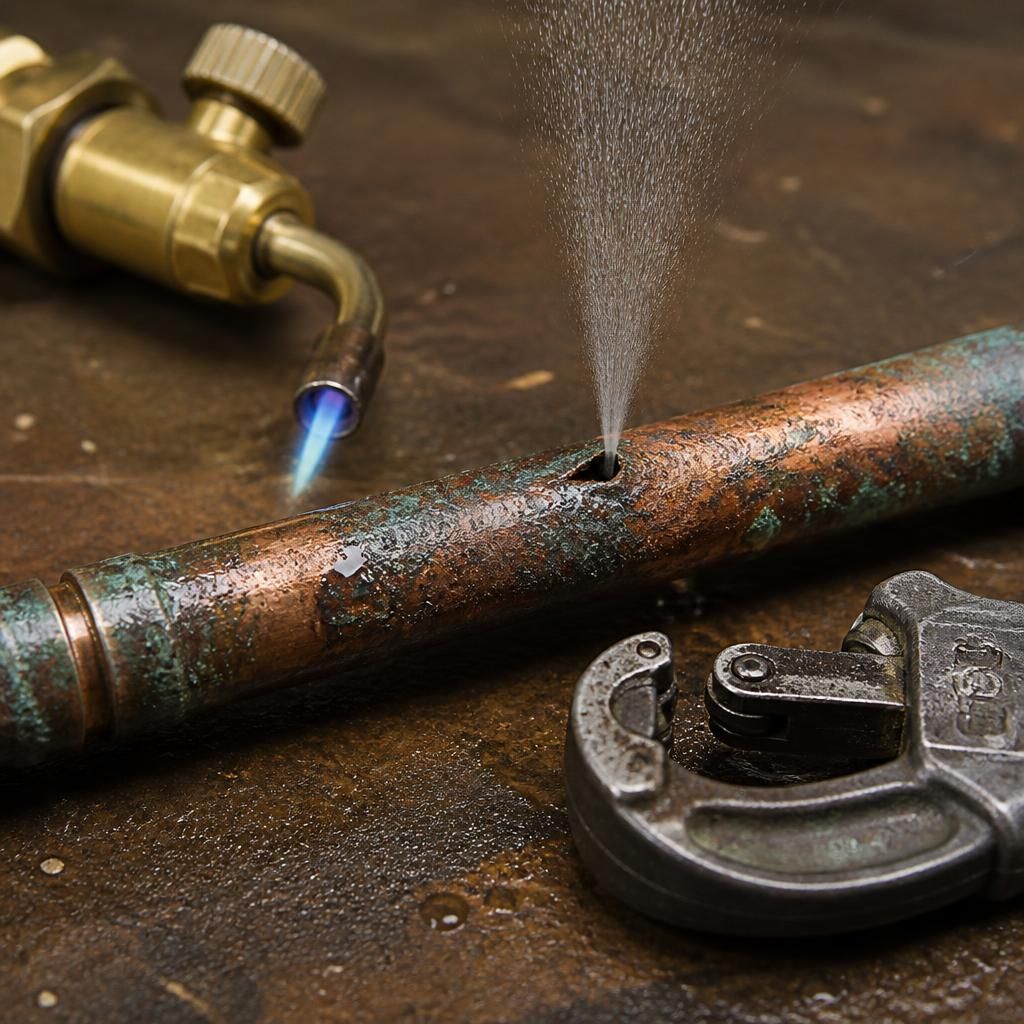
Three options, and the right one depends on why the pipe failed rather than where. Patch a single failure in an otherwise sound system. Reroute when the failed run is buried in a slab or a wall and the rest of the house is fine. Repipe when the failures are recurring, because that means the material has reached its life.
When a patch is genuinely right
A nail through a line during a remodel. A single pinhole at one bend in copper that is otherwise in good condition. A joint that was never properly made. In each of those the pipe around the failure is sound, and repairing the failure is the whole job.
When a patch is a false economy
Galvanized. It corrodes along its length rather than at a point, so a repaired section simply moves the weakest point to the next few feet. A series of small repairs on a galvanized system is the most expensive route to the repipe it was always heading toward.
Rerouting, and why it beats digging
When a supply line in a slab fails, the line can be abandoned in place and a new run taken overhead through walls and ceilings. It sounds more invasive and is usually less: drywall repairs are straightforward, opening and closing a concrete floor is not, and the new run is accessible for the rest of its life.
When it is time to repipe
Second slab leak. Pressure falling year on year at the far fixtures. Rusty water after the house has stood empty. Pinholes appearing in more than one place. Any two of those together, and the money spent on further repairs is a deposit on a job you will do anyway.
Copper or PEX for the replacement
Both are code-compliant in California. PEX installs faster, needs far fewer joints inside walls and tolerates the water chemistry here well. Copper is rigid and is what many owners prefer for exposed runs. Access to the runs usually influences the total more than the material choice does.
What the quote should tell you
Which option, and why that option rather than the other two. What is opened and who closes it: drywall patching, texture and paint included or not. Whether the work is permitted. And the warranty term in writing. Two quotes are only comparable when all four are stated.
The diagnosis comes first
We locate the leak before recommending anything, because the same symptom leads to all three answers depending on the material and the history. A recommendation made without that is a preference, not a diagnosis.