
Emergency Plumbing
Garbage Disposal Repair: Jams, Leaks, and When to Replace
Reset buttons, hex key tricks, and the leak points that mean it's cheaper to swap the unit than rebuild it.
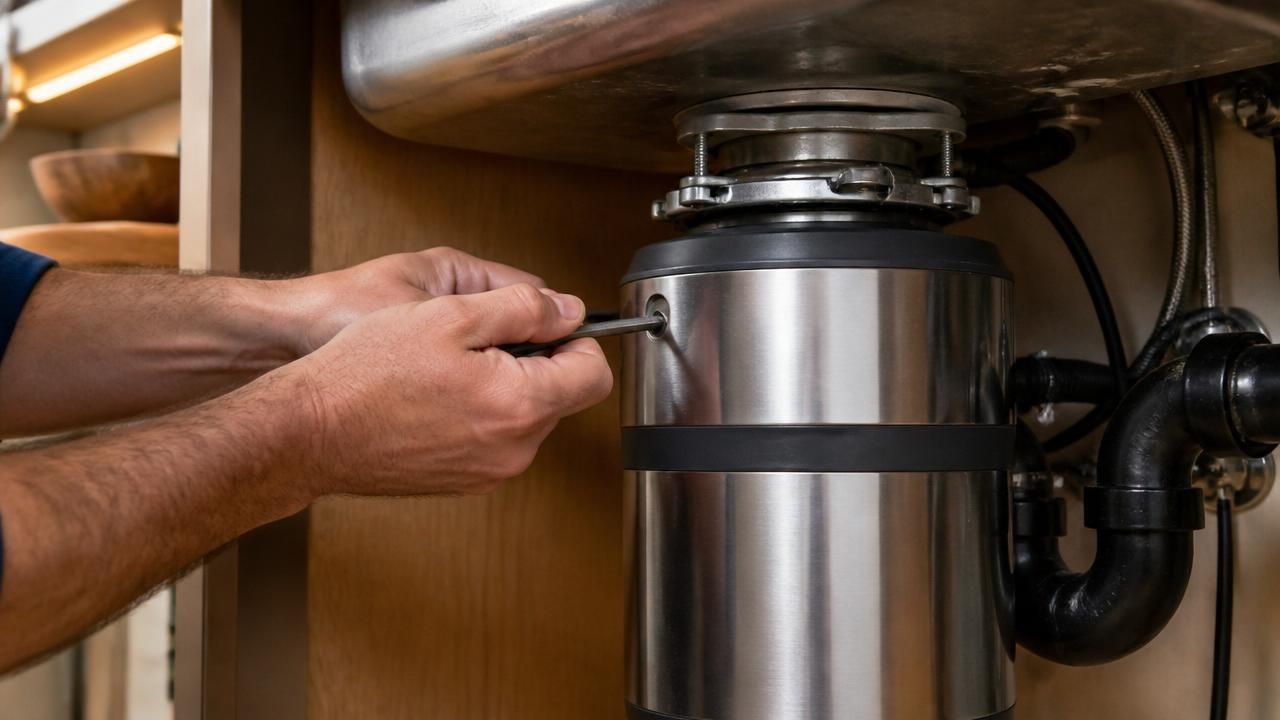
A disposal that hums but does not turn is jammed, and it is almost always fixable in five minutes. Switch it off at the wall, then use the hex wrench that came with it in the socket underneath the unit; work it back and forth until it turns freely. Then press the red reset button on the base.
Never put your hand in it
Even switched off. If something has to be retrieved, use tongs or pliers with the power off at the breaker, not merely at the wall switch. Disposals do not have blades in the way people imagine (they have blunt impellers and a fast motor), but the injury risk is real and entirely avoidable.
Nothing at all when switched on
Check the reset button first, then the breaker, then whether the switch itself has failed. A disposal that is silent has an electrical fault; one that hums has a mechanical one. That single distinction saves most of the diagnosis.
Leaks, by location
From the top, where it meets the sink, means the mounting flange seal has failed. It can be re-sealed. From the side, where the dishwasher hose or the discharge tube connects, means a gasket or a loose clamp. From the bottom of the housing means the internal seal has gone and water is in the motor: that unit is finished.
What is actually killing it
Fibrous vegetable ends, potato peel, rice and pasta, coffee grounds, and grease. The first two wrap the impellers, the middle two swell in the trap downstream, and grease lines the pipe until the branch closes. A disposal is not a bin, and in a kitchen it is the fastest route to a blocked line.
Use cold water, and keep it running
Cold keeps fats solid so they are chopped and carried away rather than melting and coating the pipe further along. Run it for twenty seconds after the grinding stops, so what has been ground actually leaves the trap instead of settling in it.
When it is the drain, not the disposal
If the sink backs up while the disposal runs freely, the blockage is downstream. Running the unit repeatedly into standing water achieves nothing and risks the seal. Clear the trap first.
Repair or replace
Jams, reset trips, flange leaks and hose connections are all repairs. A leak from the bottom of the housing, a burnt smell, or a motor that trips its own reset repeatedly are the end of the unit. Replacement is straightforward, and it is the moment to check that the dishwasher connection and the trap arm behind it are in good order.