
Drain Cleaning
Hydro Jetting vs. Snaking: Which Drain Cleaning Method Is Right?
A side-by-side comparison of cost, longevity, and best use cases.
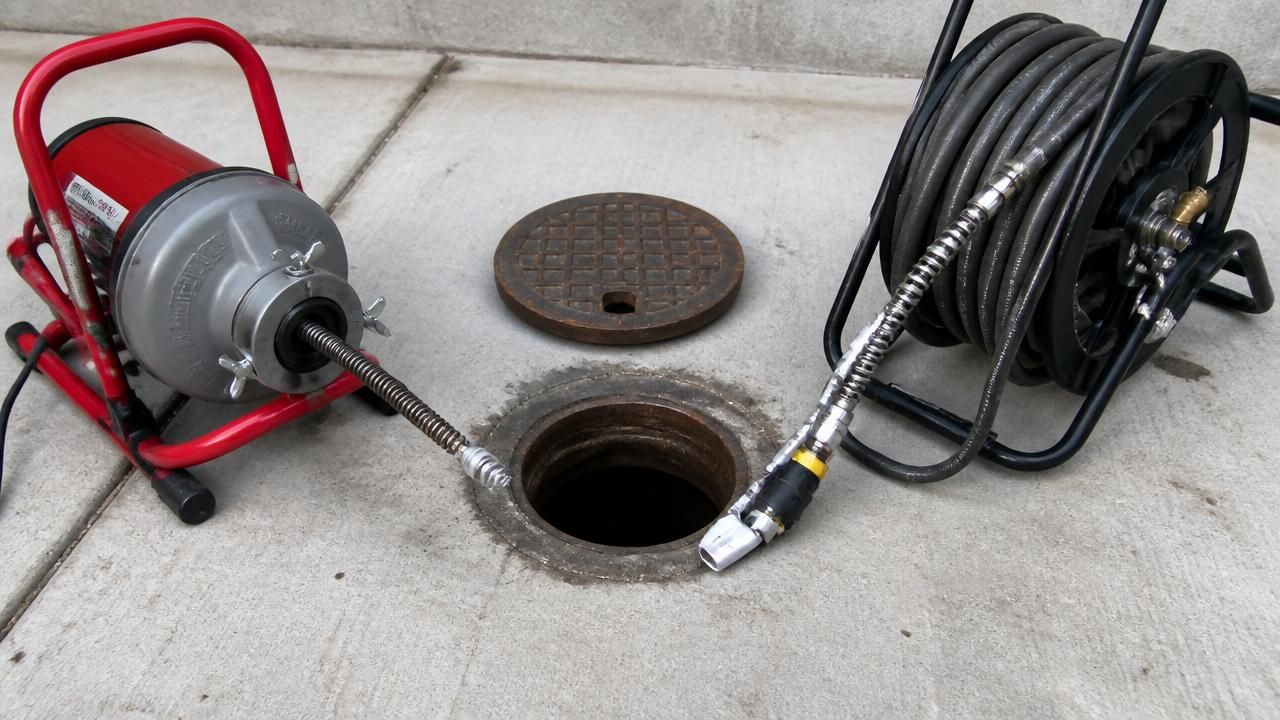
Snaking cuts a channel through a blockage and restores flow today. Hydro jetting scours the pipe wall back to its original bore and flushes the debris out. One is a fast fix, the other is a cleaning, and the choice depends entirely on whether this is the first blockage or the third.
How a cable machine works
A rotating steel cable with a cutting head is fed down the line. It bores through the obstruction and, with the right head, shears roots off at the wall. It is fast, it needs less access, and it is genuinely the right tool for a one-off blockage or for getting a house working again at two in the morning.
How jetting works
A high-pressure hose with a rear-facing nozzle array pulls itself up the line while blasting the wall. It removes grease lining, scale and fine root hair that a cable rides over, and it carries the debris back down to the main rather than leaving it in place. What it produces is a pipe closer to its installed diameter, not a hole through the middle of a deposit.
When jetting is the wrong call
On a line that has lost structural wall. Cast iron eaten thin, or clay with open joints and a partial collapse, can be damaged by full pressure. This is exactly why the camera comes first: jetting a failing pipe is how a blockage becomes an excavation.
The cost conversation, honestly
Jetting costs more per visit than snaking and we do not publish either figure. The comparison that matters is not per visit but per year: three snaking visits to the same kitchen line usually exceed one jetting, and the line is back where it started at the end of it.
How we decide
First blockage, no history, water moving again after the cable. Snaking is enough and we will say so. Recurring blockage, or a camera showing grease lining or scale, and jetting is what actually changes the outcome. Structural damage on camera and neither is the answer; that is a repair conversation.
What you should get either way
Confirmation that the line runs clear afterwards, and on anything recurring, footage. A drain cleared without a look inside is a drain that will be cleared again.
What each one leaves behind
This is the part that decides the interval. A cable leaves the deposit on the wall with a hole through it, and whatever it cut falls downstream to lodge somewhere else. A jetter carries the material back to the main and leaves the wall bare. It is why two lines cleared on the same day by different methods behave completely differently three months later.