
Drain Cleaning
Commercial Drain Cleaning in Orange County: Restaurants, Salons, and Multi-Unit
Grease traps, hair lines, and high-volume restrooms: service schedules that keep commercial drains flowing.
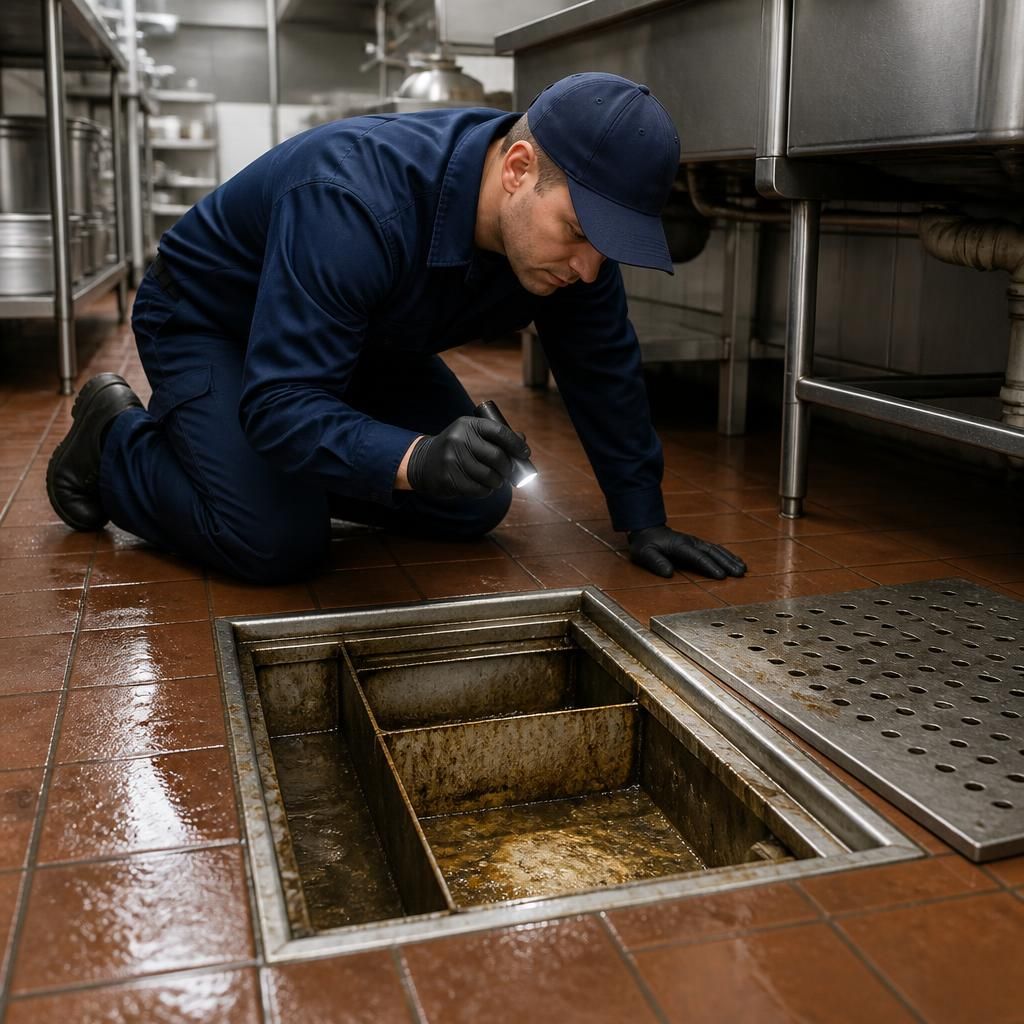
Commercial drain lines fail on a schedule, and the schedule is set by what the business puts down them. A restaurant kitchen line carries grease that cools and lines the pipe until the bore closes; a salon line carries hair and product; an office building line usually fails on wipes. Same trade, three different intervals.
Why snaking a kitchen line is a temporary answer
Grease coats the wall evenly rather than forming a plug. A cable bores a channel through it and flow returns, but the effective diameter is a fraction of the pipe's, and it closes again at the rate it closed the first time. Jetting takes the wall back, which is why commercial kitchens are where the difference between the two methods shows most clearly.
Grease interceptors are maintenance with a paper trail
They need servicing on a schedule set by what the kitchen actually produces, before the line backs up rather than after, and the service record matters when the health inspector asks. An interceptor that is only pumped when there is a problem is not being maintained, it is being reacted to.
Salons, and what makes them different
Fine hair plus product residue binds into a dense mat that a cable can pass through without removing. These lines respond well to jetting and poorly to repeated cabling, and the interval is predictable enough to schedule rather than wait out.
The real cost of a blockage is not the plumbing
It is the hours the doors are shut. That is why most commercial work is scheduled outside trading hours, and why a line with a known history is worth putting on a schedule rather than clearing on the day it fails. A jetting visit booked for a Monday morning is cheaper than the same visit during Saturday service, in every sense that matters.
What we do on a first visit
Read the building before quoting a schedule: where the runs go, what material they are, where the interceptor discharges, and whether there is sound pipe behind the deposit. Camera footage on anything recurring, so the interval is set by evidence rather than by a default.
Who we work with
Restaurants and commercial kitchens, salons, retail units, offices, and multi-unit residential common areas across Orange County, under California licence #1131308, classification C-36. Emergency dispatch is 24 hours a day, including weekends.
Multi-unit buildings and the shared stack
In apartments and mixed-use buildings the fault is frequently in one unit and the cause in another, or in a stack nobody has access to. Cameraing the shared line before recommending work matters more here than anywhere: it is the difference between an association paying to open one wall and paying to open several on a guess.