
Drain Cleaning
Hydro Jetting for Tree Roots: What Homeowners Should Know
Can 4,000 PSI cut through tree roots? We explain when jetting works, when it doesn't, and how to keep roots from coming back.
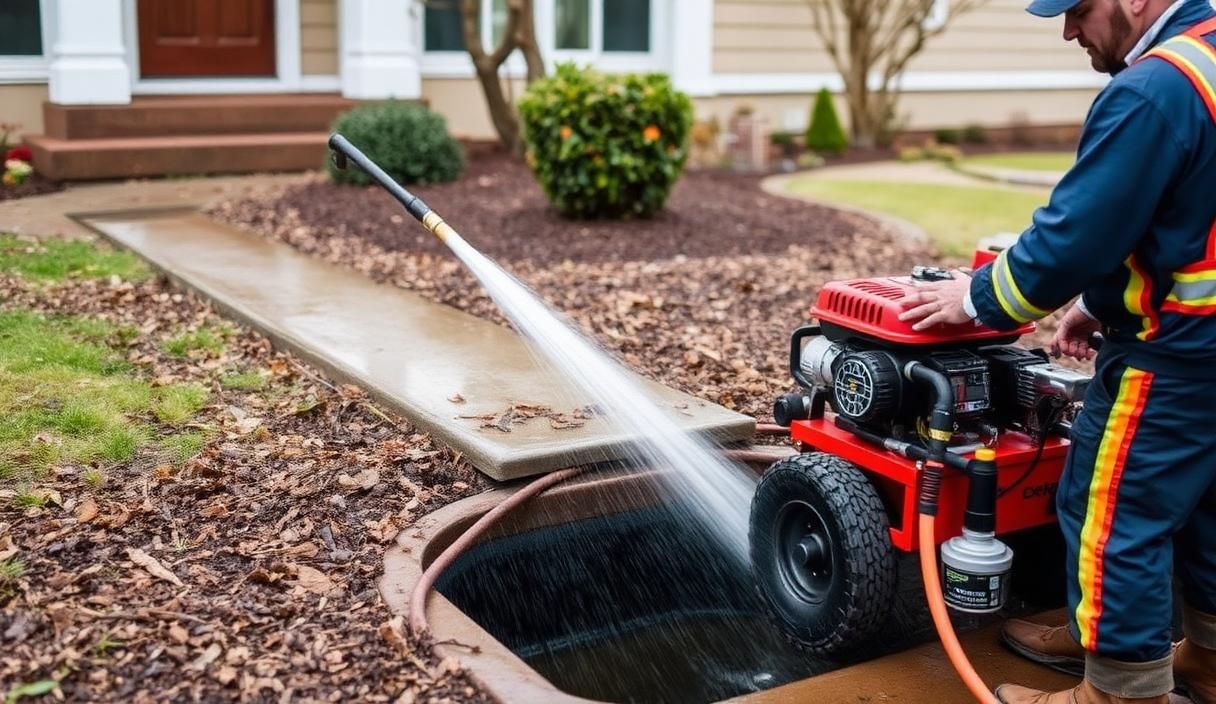
Jetting handles roots well, with one caveat that matters: it removes what has grown in, it does not close the opening they grew through. A jetted root line runs clear immediately and will re-root over the following seasons unless the joint or crack is sealed.
Why jetting beats a cable on roots
A cutting head shears the mass off at the pipe wall and leaves the fine hair behind, plus whatever the mass was holding. A jetter's rear-facing nozzles strip the wall and flush the fragments downstream to the main. What you get is a clean pipe rather than a channel through a root ball, and the interval before the next blockage is meaningfully longer.
It is still maintenance, not repair
This is the part people are not told. Roots enter through a failed joint or a crack, and pressure does not fix either. Lining seals the joints along the run and removes the entry point; bursting replaces the pipe entirely. Jetting is what keeps the line usable in the meantime, and for some households on a maintenance schedule that is a reasonable long-term choice.
When it should not be done
Where the camera shows the wall is gone. Clay with open joints and displaced sections, or cast iron corroded thin, can fail under pressure. Any company willing to jet a root line without looking first is taking a risk with your pipe, not theirs.
Roots in Orange County laterals
Older inland neighbourhoods with mature street trees and clay laterals are where this concentrates. Cities regulate removal of those trees, and removal is rarely the answer anyway. A sound sealed pipe is not vulnerable to a healthy tree. Sealing the pipe is the durable fix, and trenchless methods do it without taking the landscaping out.
What a sensible plan looks like
Jet it, camera it, and decide with the footage in front of you: seal the run, or schedule maintenance at an interval the growth rate justifies. Both are legitimate. What is not is jetting annually for years without anyone ever having looked at why.
Timing it against the season
Roots grow toward water, and in Southern California that means the wet months drive the intrusion. A line with a known root history is best cleared in autumn, before the rain rather than during the first backup of the season. Clearing it in February, standing in the yard in the rain, is the same job done at the worst possible moment.
Ask what pressure was used
Jetting is not one setting. A nozzle and pressure chosen for a sound cast-iron main is not what should go into a clay lateral with open joints. A contractor who cannot tell you what they ran, and why that was appropriate for your pipe, has not made the decision: they have used whatever was on the machine.